Skip to content

Pediatric Eye Exams

It is important to schedule regular eye exams for your children with an optometrist.

According to experts, 80% of learning is visual, which means that if your child is having difficulty seeing clearly, his or her learning can be affected. This also goes for infants who develop and learn about the world around them through their sense of sight. To ensure that your children have the visual resources they need to grow and develop normally, their eyes and vision should be checked by an eye doctor at certain stages of their development.
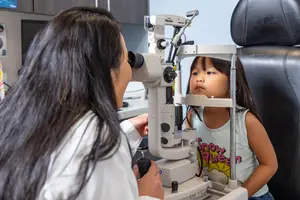
A woman doctor examining a young girl's eyes using a slit lamp in a clinic
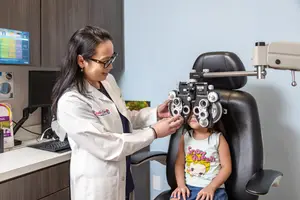
A female doctor is examining a young girl's eyes using an ophthalmoscope in an eye clinic.

When should Eye Exams Start?

The AOA recommends eye exams for kids at 6 months, 3 years, when starting school, and every two years after. If a child shows any signs of a vision problem or has certain risk factors, such as developmental delays, premature birth, crossed or lazy eyes, a family history of vision problems, or previous injuries, an eye doctor should examine their eyes more frequently. A child who wears eyeglasses or contact lenses should have their eyes examined yearly. Children’s eyes can change rapidly as they grow.

Myopia Prevention and Early Intervention

Myopia, or nearsightedness, is more than just a need for glasses. For many children, myopia progresses as they grow, leading to an increased risk of serious vision-threatening conditions later in life. At Kudo Care Center, we believe that early intervention is the best way to protect your child's long-term visual health.

By managing myopia early through specialized treatments, we can slow down the lengthening of the eye. This reduces the risk of developing high myopia, which is closely linked to eye diseases such as retinal detachment, glaucoma, and macular degeneration in adulthood. Regular pediatric exams allow our optometrists to detect these risks early and provide a customized plan for lasting sight.